Henry Katanga, a businessman in Kampala, was felled by a gunshot to his head at his Mbuya home on November 3, 2023.
Given his prominence and that of his family, his death drew media attention and elicited mixed reactions on social media.
Even before the full picture of the circumstances of his death emerged, his widow, Molly Katanga, became the prime suspect. She was with him in the bedroom on that fateful day.
On the surface, it appeared as if there had been a fight between the couple, and Molly had pulled the trigger. So the general sentiment in the public was that Molly, who had cuts on the head and the hand, was the guilty party.
She was arrested in her poor medical state, and her request for bail was denied as the prosecution started piecing together a murder case.
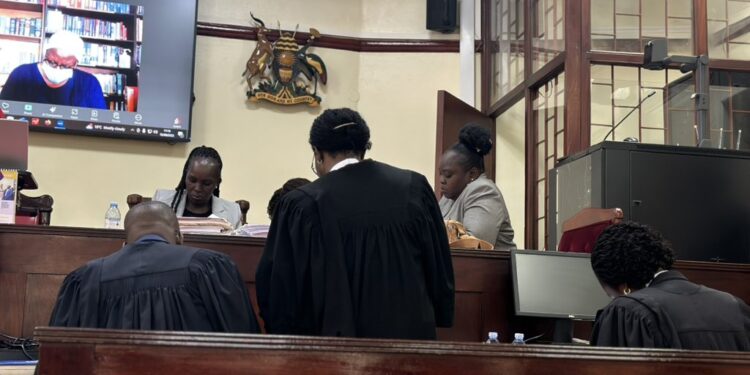
The trial started on July 4, 2024, eight months after Henry Katanga’s death. The case was first handled by Justice Isaac Muwata; however, in January last year, Justice Rosette Comfort Kania took over after Muwata became indisposed.
Over the last one and a half years, the prosecution has presented several witnesses ranging from relatives to police officers to Katanga’s associates to try to make their case in a trial that has had its fair share of drama.
The trial reached its halfway point after the prosecution closed its case. Based on the submissions and testimonies of the prosecution witnessess, Molly’s legal team, in a written submission, said the state has not proved its allegations.
For those who have not kept tabs on the trial, we bring you a step-by-step account of the key moments, based on courtroom testimony and the written submissions filed by both sides.
The scene of the shooting
The first witnesses to testify were police officers who responded to the scene.
They described arriving at the Katanga home and finding Henry Katanga lying with a gunshot wound.
During the examination, they presented the state’s theory that Katanga’s death was suspicious and required a full homicide investigation.
Under cross-examination, Molly’s lawyers focused on the handling of the exhibits. They asked questions about who touched what, when photographs were taken, and whether proper scene of crime protocols were followed.
This is what Emmanuel Olugu, a police officer who was dispatched to the Katanga residence in Mbuya by his supervisor, told the court.
“The scene was too complicated. It didn’t match what I expected from a suicide. That’s when I called for reinforcements,” Olugu said.
MacDosman Kabega, Molly’s lawyer, then asked him: “Can you confirm that your report contains no mention of tampering or destruction of evidence?”
Olugu admitted that his report did not indicate that any evidence had been tampered with.
In their submissions, Molly’s lawyers later argued that there were inconsistencies in how officers described the recovery and documentation of exhibits.
They suggested that these gaps cast doubt on the reliability of the forensic analysis.
The prosecution, in reply, maintained that the scene was properly processed and that minor variations in wording did not undermine the core evidence.
The swabs and the DNA analysts
The trial then turned to forensic science, which became one of the major bones of contention.
Police witnesses testified that they collected four swabs from Molly Katanga for analysis. These were intended to test for gunshot residue and possible DNA transfer.
But when the Government Analytical Laboratory evidence was presented, seven swabs were listed as exhibits.
How did four turn into seven, the defence lawyers asked.
In cross-examination, the defence repeatedly asked officers and analysts to account for the discrepancy. If four swabs were collected, where did the additional three come from?
The defence, in their submission as requested by the court, questions whether proper documentation was maintained at every stage.
The prosecution’s written reply insists that the exhibits were properly labelled and analysed and that the DNA findings remain intact.
But the moment left a visible mark on proceedings. Molly’s team characterised it as a serious irregularity, but the prosecution, in its submission, says it is an issue of clarification rather than substance.
Injuries to the accused
When Molly was arrested, she had deep cuts on her head, hands, and various parts of her body. In fact, her legal team did not think that she was in shape to stand for trial, and they wanted her to first get medical treatment.
In court, some prosecution witnesses, under cross-examination, described the cuts as “defensive” in nature, according to the defence submissions.
Molly’s legal team posed these questions: Were the injuries fresh? Could they have been caused in a struggle? Were they consistent with someone trying to ward off blows or an attack?
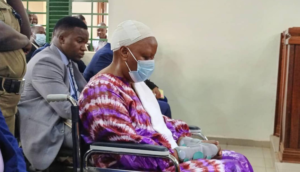
Dr. Moses Karuhanga, the director of Police Health Services, who was the prosecution’s 22nd witness, submitted that “in total, Molly Katanga had more than 60 stitches in her body.”
He went on: “These are the kinds of injuries one suffers while defending oneself from a traumatic event. However, it is also possible for the attacker to get injured in the process.”
But the prosecution does not accept that conclusion. It argues that the existence of injuries does not negate the possibility of intentional killing and must be assessed alongside other evidence presented in court.
The pathologist’s evidence
Dr Richard Ambayo, the pathologist presented by the prosecution, outlined the cause of death as a gunshot wound to the head. Asked if there was a possibility that Henry Katanga could have committed suicide, Dr. Ambayo acknowledged that, based on the autopsy findings alone, suicide could not be ruled out.
Molly’s lawyers seized on this, and in their written submissions, they stress that “the prosecution’s own witness conceded that suicide could not be excluded.”
They argue that this acknowledgment by Dr. Ambayo introduces reasonable doubt as to the manner of death.
But the prosecution, in response, submits that the court must consider the medical evidence together with scene analysis, ballistic findings, and circumstantial factors.
Still, a murder trial in which the pathologist cannot exclude suicide raises some questions.
Ballistics
Ballistics experts and investigating officers addressed the firearm and the trajectory of the bullet.
During cross-examination in April last year, Derrick Nassawali, the head of ballistics in the Uganda Police, admitted he could not definitively rule out suicide as the cause of death.
“I don’t have information to conclude whether there was a homicide or suicide,” Nassawali answered when Molly’s lawyer, Elison Karuhanga, asked him whether there was a likelihood that Henry Katanga took his life since one bullet was fired from the gun.
Karuhanga had argued that if indeed Molly had killed Katanga, the likelihood would have been high that she would have shot more than one bullet either in defence or fear.
Secondly, the defence highlighted what it described as inconsistencies in how witnesses described whether the bullet entered from the left or the right side of Katanga’s head.
Since it has been proved that Katanga was right-handed, Molly’s lawyers suggested that if he were to shoot himself, he would likely use his dominant hand (right hand). They questioned whether the trajectory described in court aligned with that possibility.
The prosecution maintained that the ballistic evidence and evidence from the scene support its case that the accused was responsible.
Allegations of contradictions
As witness after witness testified, Molly’s team built a record of what it calls “material contradictions” in the case.
In their submission, they pointed out differences in dates, variations in how exhibits were described, and inconsistencies in the narrations of how the events unfolded.
In their submissions, they argue that these are not trivial discrepancies but go “to the root of the prosecution case.”
Here is a simple exchange between Jet Tumwebaze, Molly’s lawyer, and Naomi Nyangweso, a sister to Henry Katanga and LC 1 chairperson in Bugolobi. It took place on October 8, 2024.
Tumwebaze started by questioning Nyangweso about the police statements she recorded following the death of her brother.
It emerged that Nyangweso had recorded three police statements—on November 2 and 15, 2023, and another on January 8, 2024.
She informed the court that these statements had been translated into English, although she had originally given them in her native language, Runyankore.
Tumwebaze, however, disputed her claim, asserting that all the statements were recorded in English without any translation.
“I put it to you that there was no translation given. All your statements were recorded in English. It’s, therefore, fair to say, Mrs. Nyangweso, that you know and speak English,” Tumwebaze argued.
Nyangweso firmly denied the assertion, explaining that she was not fluent in English, which is why she recorded her statements in Runyankore.
“As an LC, you are always writing letters in English. Have you ever written an English letter?” he asked. Nyangweso maintained her stance, humorously replying in English: “My lord, I write the letters in Luganda or Runyankore.”
The DPP counters that the inconsistencies and contradictions are common in any complex investigation and that the essential elements of the case remain coherent.
How will this end?
With the prosecution’s case closed, sources told us that Molly Katanga’s legal team could submit next week, when the trial resumes, that there is no case to answer.
That basing on what the different prosecution witnesses have submitted, it has failed to prove that their client “unlawfully” caused her husband’s death with malice aforethought.
Should they adopt this strategy, it would rekindle memories of the 2005 rape trial of Dr. Kizza Besigye, where his legal team opted not to put him on the stand, arguing that the prosecution had not established a prima facie case.
Justice John Bosco Katutsi later dismissed the case based on the shoddiness of the work done by the prosecution.
When the trial resumes on February 19, Molly’s defence could make formal submissions on whether there is a case to answer.
If Justice Kania agrees that the prosecution has not established sufficient evidence, Molly could be acquitted at this stage.
If the court finds there is a case to answer, the trial will proceed to the defence stage. Molly may then choose to testify or remain silent, as is her right.
To successfully prosecute a murder case, the state must ensure that these four elements are proven during the trial: that there was death; that the act of death was unlawful with no justification, such as self-defence; the presence of malice aforethought, such as the motivation or intent to kill; and lastly, that the accused participated or caused the death.
How will this end?