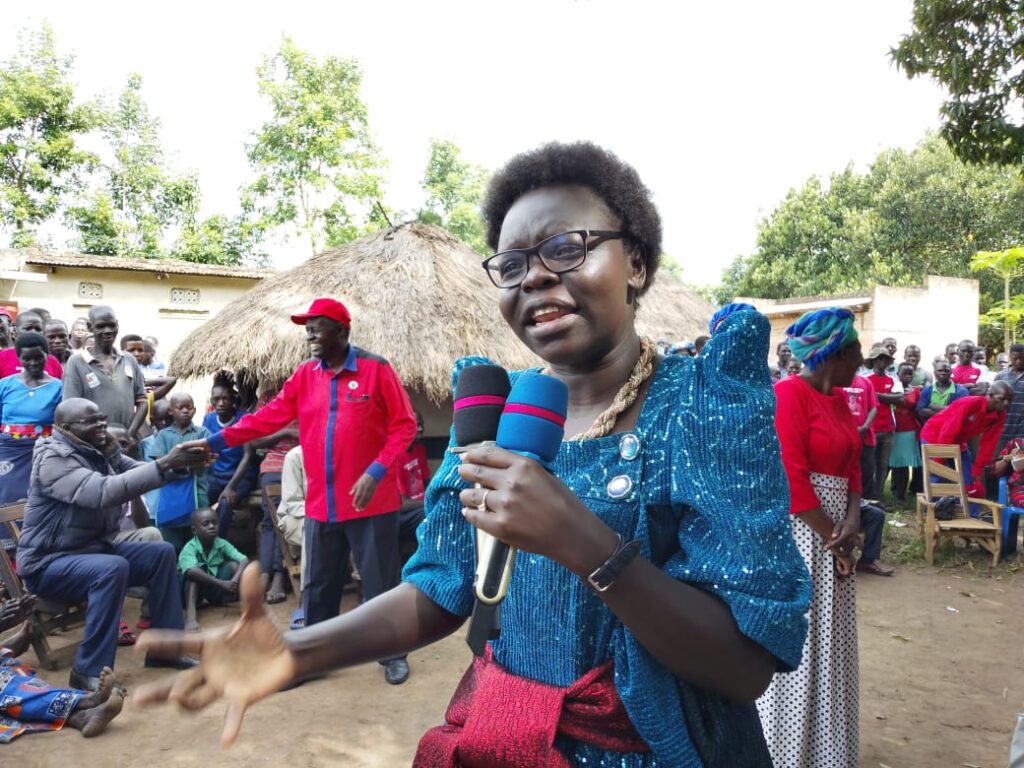
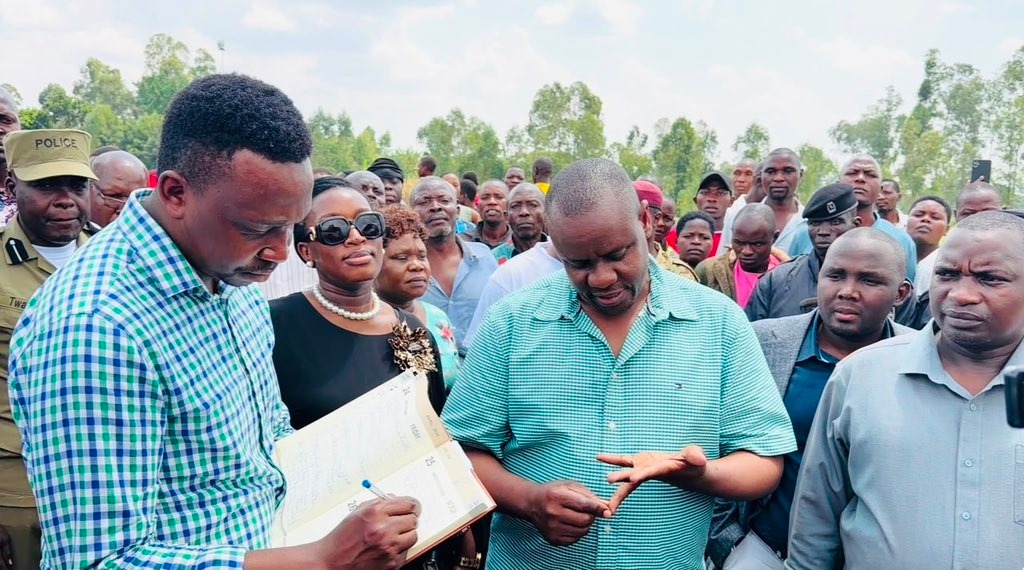
Ministers Balaam Barugahara and Justine Nameere have spent the past few days touring Mbale and Bulambuli, catching civil servants off guard and ordering arrests on the spot.
Ghost workers and pupils have been uncovered. A headteacher was arrested for allegedly inflating pupil numbers while a district engineer was remanded over a bridge built with black soil instead of proper construction material.
A toilet worth Shs 73 million turned out to have no pit at all, the ministers showed us.
For many young Ugandans watching the videos online, it has felt like something new is happening: a minister walking into a health centre unannounced, counting workers who are supposed to be on duty, and ordering the arrest of those who are not there.
But it is not new. Uganda has seen this kind of theatre before, and it has rarely changed the fortunes of the country in its long fight against corruption.
Before Barugahara and Nameere, there was Peter Ogwang, the minister of state for Sports. When he briefly served as state minister for Economic Monitoring after the 2021 elections, Ogwang spent 2021 and 2022 touring districts from Bunyoro to Bukwo, ordering the arrest of engineers and contractors over shoddy work.
In Bukwo, he discovered ghost irrigation projects worth tens of millions of shillings that existed only on paper. In Mbale, Ogwang was stunned to learn that a market built at a cost of Shs 26 billion was collecting just one million shillings a month in revenue.
Ogwang warned officials that “it will not be business as usual”, a language which is almost identical to what Barugahara and Nameere are saying today.
At the height of Ogwang’s operations, Fred Kyemba, the then president of the Uganda Institution of Professional Engineers (UIPE), said the arrests of engineers were “demeaning, harsh and inhumane.”
Ogwang hit back, accusing the engineers of defending shoddy work.
UIPE, in a statement over the weekend, accused Balaam and Nameere of turning the fight against corruption into a public spectacle without first conducting technical investigations. The engineers said that while they support the anti-corruption drive in principle, technical findings should come before public arrests, not after.
So, it is the same script, only the names have changed.
Before Ogwang, there was Sarah Opendi, who, as minister of state for Health, did something even more theatrical.
In September 2017, she wrapped herself in a hijab and rode a boda boda to Naguru Hospital in Kampala, pretending to be a sick patient.
She had heard complaints that staff there were demanding bribes for services that were supposed to be free. Within the hour, a laboratory technician and a nursing assistant had asked her for Shs 150,000 for tests that should have cost nothing. She paid, then called the police, and both workers were arrested.
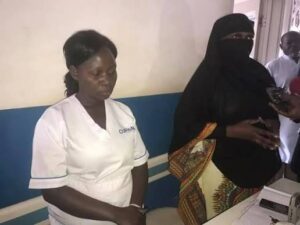
Her move made news headlines, but nine years later, few Ugandans can say what happened to those two health workers after that, or whether the culture of bribery at Naguru Hospital, or at any other public hospital, has actually changed.
Then there was Aidah Nantaba, the former state minister for Lands, who became a household name for storming villages and forcing landlords to let evicted tenants return to their land.
She was praised by ordinary tenants who felt, for once, that someone powerful was on their side. But her methods left a long trail of legal trouble.
In one case, the High Court attached her ministerial salary over a debt of Shs 23.7 million, after businessman Abbey Kiberu successfully petitioned the court to quash her order handing his 38-acre piece of land in Wakiso to another family.
Her own defenders admitted that legally she had no power to override court decisions, even if her actions felt morally justified to the poor families she was trying to protect.
Yet the most instructive example for Balaam and Nameere may be Col Edith Nakalema. As head of the State House Anti-Corruption Unit from 2018 to 2022, Nakalema, with cameras rolling, personally led security teams to round up officials suspected of corruption.
How many of you remember when Nakalema stormed the bus park to arrest drivers accused of overcharging stranded passengers during the Covid-19 lockdown?
It must also be noted that many of the cases she built did not survive the courts.
Her unit arrested Dr Charles Lagu, the former executive director of the Entebbe-based national livestock breeding centre, on accusations of abuse of office, causing financial loss, and conspiracy to defraud.
It took nearly five years, but in November 2025, the Director of Public Prosecutions withdrew all charges against Dr Lagu and nine others. The prosecutor told the court that she had been instructed to drop the case.
None of this means Barugahara and Nameere are wrong to demand accountability in local government. Ugandans have watched their taxes vanish into shoddy roads and empty markets for too long, and there is something satisfying about seeing a minister demand answers on the spot.
Yet history suggests that public arrests without careful investigation tend to produce short-lived excitement within the public, who always move on to the next trending thing.
Barugahara and Nameere are within their rights and powers to carry out their responsibilities even theatrically, but some analysts argue that until Uganda builds strong investigative systems that can survive a courtroom, nothing will come of these efforts.
A bold minister like Barugahara or any other public official will storm a school, a hospital, or a bridge with cameras and outrage. The public will applaud him on social media and dish out all manner of praise.
When the cameras are off, the minister will quietly travel back to his air-conditioned office in Kampala, and the public shall move on to the next trending thing.
And the trending thing right now, on social media, is a question asked by Godfather: “Who mixed prostitutes with ordinary people?”