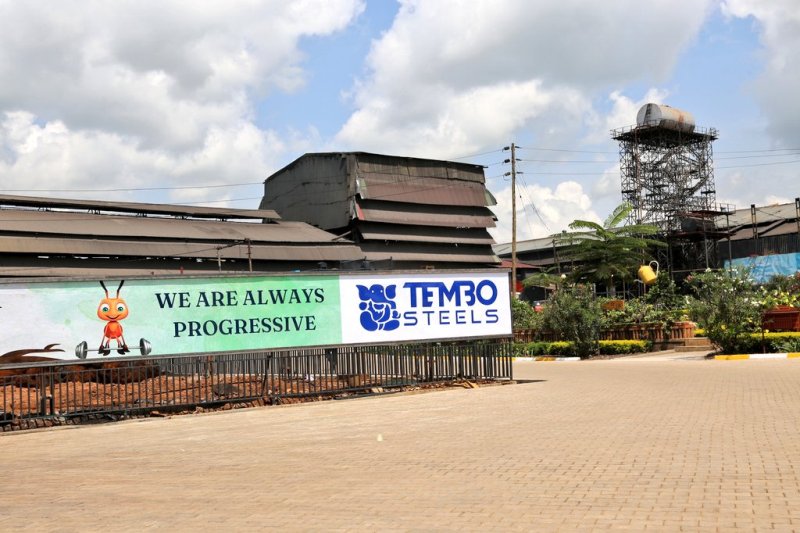
Paul Maziike Ssemwogerere, a welder, who accused Tembo Steels Uganda of unfairly dismissing him has lost his case after the court ruled that he did not qualify for labour protection.
Ssemwogerere was hired as a welder by Tembo Steels on September 12, 2023. He was paid Shs 75,000 per day.
Ssemwogerere told the court that he had been recruited to work on what he believed was a two-year project. He claimed that he had also been promised permanent employment in the production department after the project ended.
However, in January 2024 he fell ill. He blamed his sickness on poor working conditions, including the alleged failure by the company to provide protective gear.
He was first treated at Mercy Health Centre and later referred to Mulago hospital, where he underwent surgery.
According to his testimony, he spent millions of shillings on treatment and expected Tembo Steels to reimburse him. When he reported back to work, he was locked out of the premises without any explanation.
Ssemwogerere then reported the matter to a labour officer in Iganga and when mediation failed, the case was referred to the Industrial Court.
In court, he sought a declaration that his dismissal was unfair, along with more than Shs 100 million in general damages, Shs 18.8 million in medical expenses, unpaid salary, notice pay, and other claims.
Ssemwogerere’s lawyer, Julius Naita of Naita & Co Advocates, argued that the company had violated the Employment Act by failing to give his client notice, reasons for termination, or a hearing.
Naita insisted that his client was not a casual worker but an employee under a contract of service, and therefore entitled to full legal protection.
He also challenged Tembo Steels’ version of events, saying there was no evidence that Ssemwogerere had been asked to wait for alternative employment as claimed.
On the other hand, Tembo Steels, represented by Elinah Kawalya of Kean Advocates, painted a very different picture.
The company argued that Ssemwogerere was hired on a project basis and that his job naturally came to an end when the work was completed. It denied dismissing him.
Tembo Steels also said it had even asked Ssemwogerere to wait for another assignment, but he refused.
Court orders DNA test as wife, ‘daughter’ fight over late man’s estate
Another key point in the defence was that Ssemwogerere had initially been a casual worker, paid daily, and therefore did not have the same rights as a permanent employee.
In a detailed analysis, Justice Linda Lilian Tumusiime Mugisha, explained the difference between a casual worker and a regular employee.
She cited the Employment Act, which defines a casual worker as “a person who works on a daily or hourly basis where payment of wages is due at the completion of each day’s work.”
She found that Ssemwogerere started as a casual worker because he was paid daily and had no written contract.
However, Justice Mugisha noted that under Ugandan law, a casual worker who works continuously for more than four months automatically becomes a regular employee.
This finding appeared to support Ssemwogerere’s case at first but the court went further and examined how long he actually worked as a confirmed employee.
It concluded that although he became an employee in January 2024, he only worked in that capacity for about one month before his job ended in February.
“Having transitioned to an employee… he only worked as an employee from 12/1/2024 to 13/02/2024, that is, for a period of 1 month,” Justice Mugisha ruled.
This short duration became the turning point of the case.
The court explained that under Section 70 of the Employment Act, an employee must have worked for at least 13 weeks before they can complain about unfair termination.
Because Ssemwogerere had not met this threshold, the court ruled that he could not legally challenge his dismissal.
As a result, his main claim failed.
Justice Mugisha also rejected his demand for medical expenses. She said that claims related to workplace injuries or illness fall under workers’ compensation, which is handled by a different legal process.
On the issue of unpaid salary, she noted that the company had already paid him for the 13 days he claimed, albeit later during the proceedings.
In the end, she dismissed the entire case meaning that Ssemwogerere walked away without any compensation.