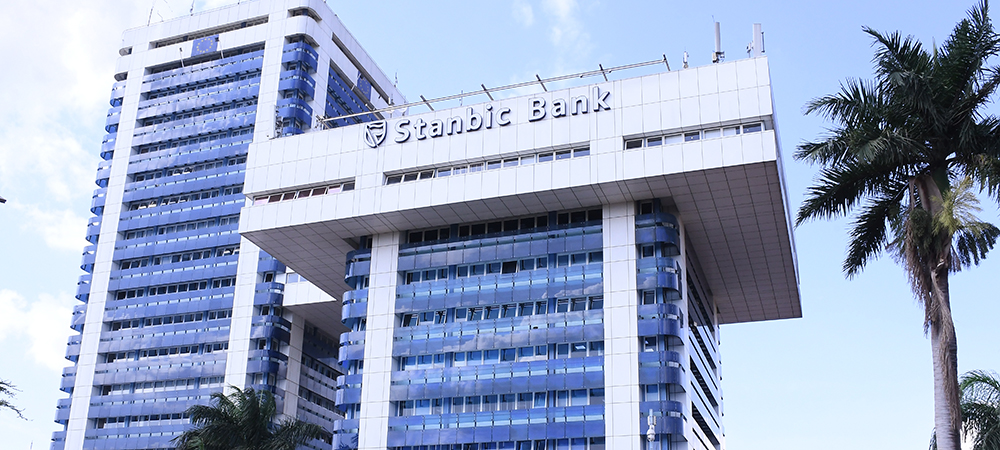
For several years, Sarick Construction Ltd and Stanbic Bank Uganda worked side by side in what appeared to be a typical banker customer relationship built on trust.
Between 2019 and 2022, Stanbic advanced multiple loan facilities to Sarick Construction to finance its operations. Samuel Okurut and Gorreti Okurut, the company’s directors, personally backed the loans, offering their properties including their matrimonial home, as security.
According to court records, the relationship began to sour when Sarick started falling behind on repayments. Stanbic says the company’s loan account was fully under the control of Samuel Okurut as chief executive officer, and that default became persistent.
On January 24, 2023, the bank formally wrote to Sarick, issuing a notice of default and giving the company 45 days to regularise its account. The letter was not ignored. There were meetings, emails and payment proposals.
In one exchange dated May 13, 2023, Okurut wrote to Stanbic acknowledging an outstanding balance of about Shs13.4 billion and proposed a repayment plan. He explained that Sarick was waiting for money from the Ministry of Water and that once paid, the company would clear the arrears.
Stanbic listeneed and waited. But the promised payments never came.
By March 22, 2023, the bank’s patience had grown thin. Stanbic issued a notice of sale in the newspapers warning that the mortgaged properties would be sold if the default continued.
When Sarick did not comply, Stanbic applied to the High Court to confirm its right to vacant possession and to sell the properties to recover the loan.
In response to the suit, Sarick did not deny owing the bank money. Instead, the company pleaded for time, again pointing to expected payments from government.
This time the court did not have the patience. It ruled in Stanbic’s favour, allowing the bank to exercise its power of sale and recover Shs 14.3 billion.
It was after this decision that the relationship between Sarick and the bank collapsed.
Samuel Okurut, the director of Sarick commissioned a comprehensive audit of the bank statements. He later told court that the audit revealed discrepancies and transactions he claimed were not authorised.
Armed with this new belief, Sarick filed applications seeking review and setting aside of the court’s earlier orders. The company argued that Stanbic had been awarded more money than it was entitled to.
At the same time, tensions escalated on the ground. Okurut told court that on October 14, 2025, that an eviction notice was served through the local council chairman, demanding that the family vacate what he described as their matrimonial home and offices.
“This is not just a commercial property. This is our home,” Okurut said in his affidavit, warning that eviction would cause irreparable harm.
Sarick, represented by Mukiibi and Kyeyune Advocates, asked court to pause execution until a pending review application was decided. The lawyers argued that enforcing a disputed figure would amount to unjust enrichment and would render the review meaningless.
Stanbic fought back.
In an affidavit sworn by Ronald Katende, the bank’s senior manager for business support and resolution, Stanbic claimed Sarick and its directors were just playing games, shifting goal posts at every turn.
Katende told court that Sarick had always acknowledged the debt and had only started disputing figures after losing in court. He said the so-called audit relied on by Sarick was misleading and related to internal business transactions, including the movements of money between accounts controlled by the directors.
“These were not loan repayments,” Katende said.
Stanbic’s lawyers from Kampala Associated Advocates (KAA) told court that Sarick had filed earlier applications in which it openly admitted indebtedness and merely asked for more time. Those applications had been dismissed as incompetent.
They also questioned the claim of imminent eviction, pointing out that Sarick failed to attach the alleged eviction notice and that previous deadlines had already lapsed.
Buildnet, Chinese firm in court over Shs 146 million debt claim
Justice Thomas Ocaya, who heard the case, agreed with much of Stanbic’s position.
While the judge acknowledged that Sarick had a pending review application, he faulted the company for its conduct. He noted that Sarick waited about 14 months after the original decree to seek a stay of execution.
“I find it hard to believe that in all that time the Applicants had not noticed the alleged discrepancies,” Justice Ocaya said.
On the emotional plea by the Okuruts about losing their matrimonial home, Justice Ocaya did not mince words.
“Once a borrower mortgages property, they cannot claim substantial loss merely because of attachment,” he ruled.
Justice Ocaya also rejected claims of irreparable harm, explaining that if Sarick eventually succeeds in its review, the court can order the bank to refund any recovered money.
In the end, dismissehed Sarick’s application and ordered the company and its directors to pay Stanbic’s legal costs.
The ruling means Stanbic Bank will proceed to recover Shs 14.3 billion as Sarick’s application for review remains pending.