
The 2025 annual report of the Office of the Auditor General has revealed that many Parish Development Model (PDM) priorities are not aligned with local government work plans, leading to funding gaps, budget deficits and stalled implementation.
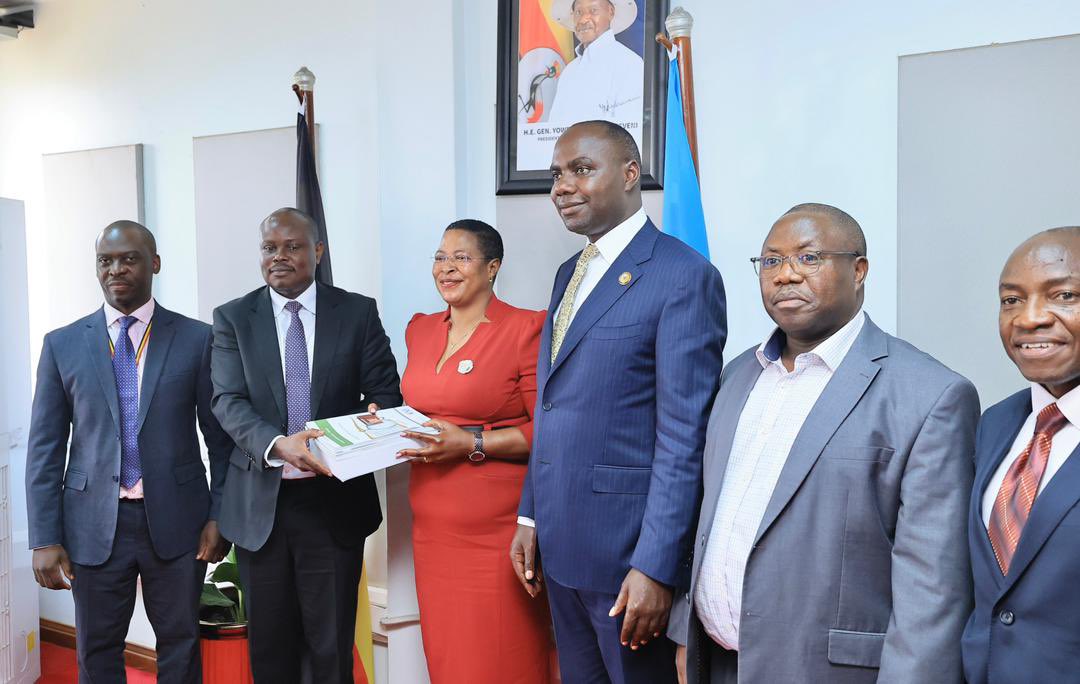
Handing over the report to Speaker Anita Among, the Auditor General Edward Akol said the mismatch between national PDM objectives and district-level planning had undermined the programme’s effectiveness.
“The needs of the Parish Development Model were not adequately identified and incorporated into local government work plans,” Akol said, noting that this resulted in non-funding of key priorities and inefficient use of resources.
The report further exposes serious cases of financial loss arising from the funding of projects that did not exist on the ground.
According to Akol, auditors established instances where money was disbursed for activities that were either abandoned, never implemented or could not be traced.
“Some of the projects were non-existent although funded. There were also cases of diversion of funds and duplication of beneficiaries among households,” Akol said.
The audit also found weaknesses in beneficiary selection and record management, with some households receiving multiple allocations while others who qualified were left out. In several parishes, accountability records were either incomplete or missing, making it difficult to establish how funds were utilised.
The report raises concern about limited supervision and weak internal controls at parish and sub-county levels, which created opportunities for abuse. In some local governments, parish chiefs and community development officers failed to provide regular progress reports, while monitoring committees were either inactive or improperly constituted.
Akol said his office had intensified efforts to fight corruption across government entities, including under the PDM.
“I undertook 24 forensic audits aimed at in-depth identification of irregularities in the use of public funds and, at the same time, supporting judicial processes,” he said. “These are currently being handled at different stages within the justice system.”
However, the Auditor General cautioned that capacity constraints continue to limit the effectiveness of his office, particularly in monitoring programmes implemented in hard-to-reach areas.
“Staff shortages and an insufficient transport fleet affect our ability to audit projects in remote areas, especially under the Parish Development Model,” Akol said.
Among urged the government to strengthen the Office of the Auditor General by providing adequate funding, staffing and logistical support, saying accountability institutions play a critical role in safeguarding public resources.
“I want to ask government to facilitate the Auditor General’s office better so that they can do their work effectively,” Among said. “I also urge the public to cooperate with the Auditor General. We want to see that all monies appropriated reach the intended beneficiaries.”
The report also highlights a sharp rise in Uganda’s public debt, which increased from Shs69.20 trillion in June 2024 to Shs114.60 trillion as of June 2025, raising concerns about debt sustainability and future fiscal pressures.
Overall, the Auditor General’s office carried out more than 6,000 audits across government ministries, departments and agencies during the period under review, uncovering persistent weaknesses in financial management, procurement and service delivery.