The National Lotteries and Gaming Board (NLGB) has predicted that Ugandans will spend at least Shs 38.6 billion on gambling and betting per day, next financial year. This translates into Shs 14.1 trillion in a year.
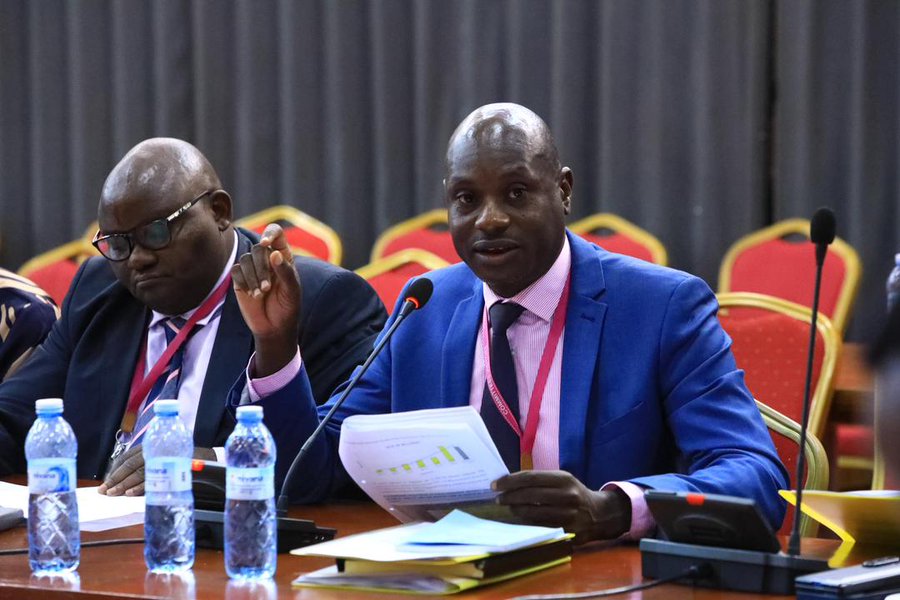
The projection was disclosed by the board’s chief executive, Denis Mudeni Winyi, while appearing before Parliament’s Finance Committee as MPs questioned the impact of gambling on the economy and the effectiveness of new monitoring systems in sealing revenue leakages.
According to Winyi, the sharp rise in gambling activity follows the rollout of the National Central Electronic Monitoring System, a Shs 6.833 billion platform acquired to track betting and casino operations in real time.
Winyi said the system was introduced to curb under declaration by operators and improve government revenue from the fast growing gaming industry.
“In 2024 to 2025, we realised Shs 323 billion. In 2025 to 2026, at half year, we had collected Shs 176 billion and we project to collect Shs 391 billion by the end of the financial year,” Winyi told MPs.
He added that the board plans to raise gambling and gaming revenue by 15% in the 2026/2027 financial year, pushing collections from the projected Shs 391 billion to Shs 450 billion.
The discussion was triggered by concerns raised by Amos Kankunda, the Rwampara MP and chairperson of the Finance Committee, who demanded an update on whether the electronic monitoring system had helped to reduce leakages and improve transparency in the sector.
Kankunda questioned whether the system was functioning as intended and whether it had delivered value for money, noting that Parliament approved its purchase to strengthen oversight of an industry that handles trillions of shillings annually.
In response, Winyi said the system had significantly improved visibility of gambling activity across the country. He explained that before its introduction, the board relied on self declaration by operators, a method that hid the true scale of betting in Uganda.
“In 2022/2023, the amount of money that people were gambling, based on what operators declared, was Shs 2.4 trillion. When we operationalised the system in 2023 to 2024, those stakes grew to Shs 4.3 trillion,” SWinyi said.
He added that in the 2024/2025 financial year, the money jumped to Shs 8.3 trillion, largely due to improved monitoring and reporting. For the current 2025/2026 financial year, the board is projecting that gamblers will dole out total Shs 14.1 trillion.
Winyi said the increased visibility has directly boosted tax collections and non tax revenue from the gaming sector, strengthening government finances.
However, the figures have renewed concern about the social cost of gambling in Uganda. Betting and gaming have been cited by civil society groups and health experts as major contributors to urban poverty, debt and depression, particularly among unemployed youth in towns and cities in Uganda.