
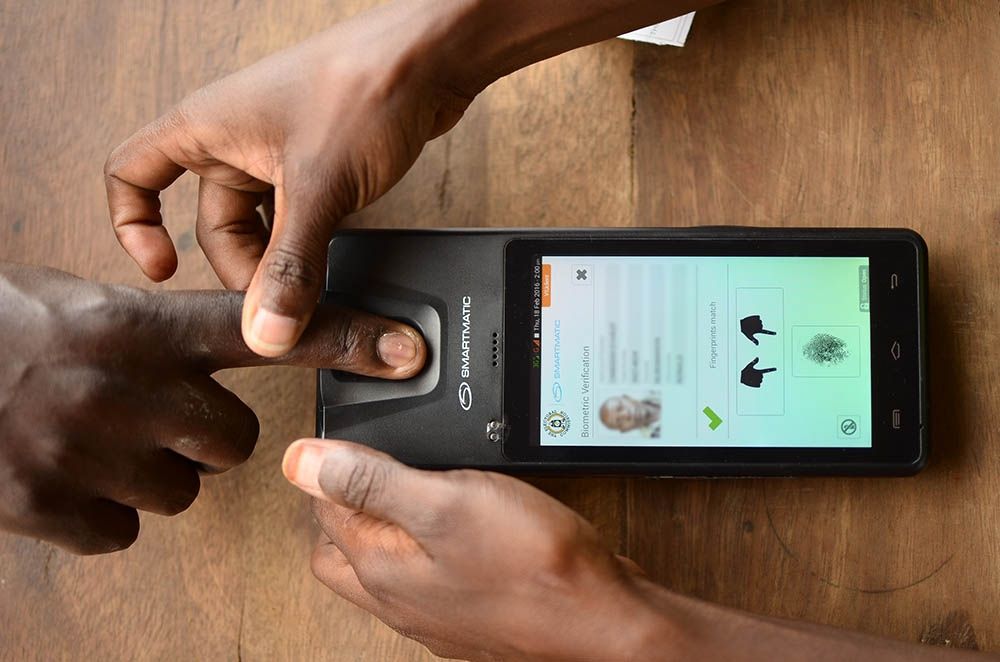
As Uganda prepares for the 2026 general elections, a small handheld device is set to play an outsized role in safeguarding the country’s democratic process. Known as the Biometric Voter Verification Kit, or BVVK, the device will be deployed at every polling station to ensure that every vote cast is legitimate, secure and confidential.
First introduced by the Electoral Commission in 2016, the BVVK was designed to address persistent challenges in Uganda’s elections, including voter impersonation, multiple voting and ballot stuffing. Ahead of the 2026 polls, the commission plans to deploy 109,142 improved BVVKs nationwide, each enhanced with additional security features aimed at strengthening public confidence in the electoral process.
On polling day, activities begin early. Before a single vote is cast, each BVVK is assigned to a specific polling station by scanning a QR code from the voters register. Once activated, the device displays the polling station details, ensuring it cannot be used elsewhere.
Election officials themselves must first undergo verification. The presiding officer and the BVVK operator authenticate their identities using national identity cards, voter location slips, fingerprints or facial recognition. This step is intended to ensure that only authorised officials manage the voting process.
Ballot papers are also placed under strict control. Each booklet of ballot papers is scanned into the BVVK before voting begins. This enables the device to recognise only ballot papers officially issued for that polling station, helping to detect any fake or unauthorised ballots later in the day.
By law, voting cannot commence without public oversight. At least ten voters must witness the opening of the polling station. These voters are verified using the BVVK, and their names are marked in the voters register, formally signalling the start of voting.
Throughout the day, every voter must undergo biometric verification. Using fingerprints or facial recognition, the BVVK confirms a voter’s eligibility before a ballot paper is issued. Without this verification, a voter is not allowed to cast a ballot, reinforcing the principle of one person, one vote.
Before a ballot paper is handed to the voter, it is scanned again at the presiding officer’s table. Polling assistants guide voters through the process to maintain order and clarity at the polling station.
Despite the extensive use of technology, the secrecy of the vote remains protected. The Electoral Commission says the BVVK does not link a voter’s identity to their ballot choice, guaranteeing the confidentiality of the vote as required by law.
Polling officially closes at 4.00 pm, after all voters who were already in line have cast their ballots. The presiding officer then closes the polling station on the BVVK, triggering post-voting checks. All ballot papers are scanned again to confirm that they were officially issued for that station. Any ballot paper that cannot be verified is set aside and recorded in the official report book, in the presence of election officials, party agents, observers and members of the public.
To further enhance transparency, declaration of results forms and accountability of ballot papers forms are scanned and photographed using the BVVK, creating a secure digital backup of key electoral records.
At the end of the process, the presiding officer formally closes the election round on the device, marking the final step in a tightly controlled system.
The BVVK has become central to the delivery of elections that are credible, transparent and trusted. As the country heads towards 2026, Ugandans are encouraged to embrace the technology, trust in the secrecy of their vote and participate fully in the democratic process, confident that each verified vote truly counts.