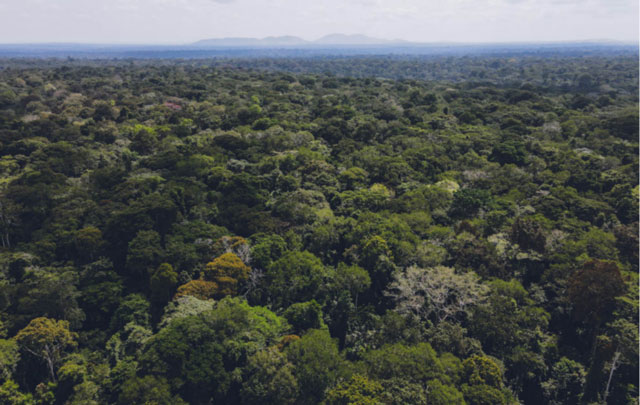
Uganda’s forest cover has sharply declined over the past three decades, falling from about 24% in 1990 to 11.8% today, largely due to rapid population growth, agricultural expansion, and rising energy demand.
However, new research conducted in midwestern Uganda shows early signs of recovery, particularly through increased tree planting by private individuals.
The study was carried out jointly by the ministry of Water and Environment, the National Forestry Authority and Environmental Management for Livelihood Improvement. It focused on understanding forest loss trends and how Uganda can better address carbon emissions through forest restoration.
Robert Byakiika, a technical adviser in the climate change department at the ministry said Uganda suffered massive forest loss up to 2015, especially in government-owned natural forests.
“There was a huge loss of forests, particularly natural forests owned by government, but the situation is now improving. The picture looks stable within protected natural forests and those still under conservation, although the situation remains worrying on forests found on private and customary land,” Byakiika said.
He said increased replanting efforts and a gradual rise in tree plantations were contributing to the recovery, but warned that more needed to be done to sustain the gains.
Tree planting plays a critical role in reducing emissions because trees absorb carbon dioxide from the atmosphere through photosynthesis. This process allows forests to act as carbon sinks, helping to slow climate change.
Despite this, emissions in Uganda continue to rise faster than the country’s ability to remove them from the atmosphere.
Junior Wamani, a consultant at Environmental Management for Livelihood Improvement, said emissions are increasing at a rate of about 12 percent, while removals through forests and other natural systems stand at only about 5 percent.
“This shows that Uganda is still losing more than it is gaining,” Wamani said.
He recommended that Uganda adopt a tier-three methodology, an advanced approach used to accurately measure and manage emissions and removals.
“Uganda should move towards decentralising forest information down to district level so that even a small-scale farmer can access data on emissions and removals and make informed decisions to improve the environment,” he said.
Wamani stressed the importance of recognising the contribution of smallholder farmers to emissions reduction through tree planting and land management. However, he noted that challenges remain, particularly when forest plantations are destroyed by fires.
“At times when a forest plantation catches fire, all the gains are lost, making it very difficult to account for emissions reductions,” he said.