The Electoral Commission (EC) will deploy 109,142 biometric voter verification kits across the country during the 2026 general elections in a move aimed at improving efficiency, credibility, and timely delivery of election results.
The deputy chairperson of the EC, Aisha Lubega, said the commission has adopted technology to streamline the voting process and urged Ugandans to embrace the new system.
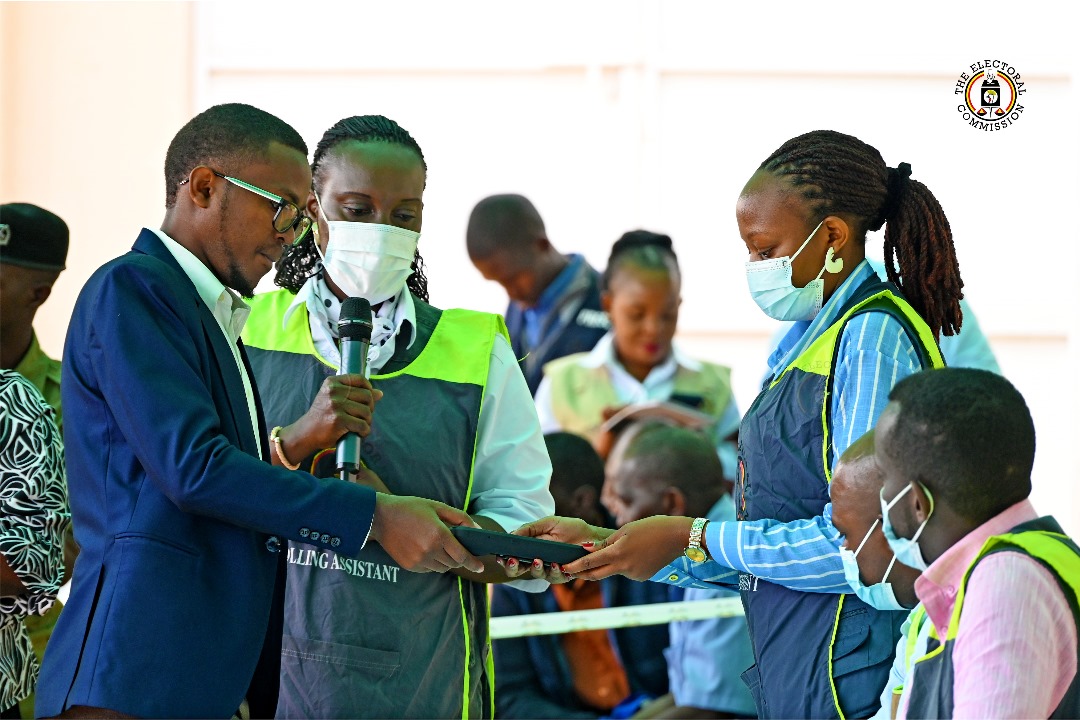
Lubega made the remarks on Tuesday at the commission’s headquarters during a mock election exercise demonstrating the use of the biometric voter verification kits for presidential and parliamentary elections.
She revealed that the commission will deploy two biometric voter verification kits at each polling station countrywide, bringing the total number of gadgets to 19,142, despite Uganda having 50,739 polling stations.
Lubega explained that each kit is equipped with a strong battery and two standby power banks to ensure uninterrupted operation throughout polling day.
On training, she said all the biometric kits have already been delivered into the country, and that training of operators has begun nationwide. The training involves two days of classroom instruction followed by three days of practical sessions.
The director of technical services at the commission, Solomon Muhumuza, explained how the biometric voter verification system will work on polling day.
According to Muhumuza, the process begins with the presiding officer being assigned to the kit using their national identity card or fingerprints. Registered voters will then present either a national identity card or a voter location slip.
“The machine will verify the voter using fingerprints or facial recognition and will immediately communicate whether the voter is eligible or rejected,” Muhumuza said.
He explained that the system will confirm whether a voter is registered for specific categories, including presidential, parliamentary, and local government elections. If a voter is not found in the register for that polling station, they will be advised to vote at the correct station.
Before voting begins, the presiding officer will assign ballot boxes to the biometric kit. Once verification is successful, the voter will proceed to vote in all applicable categories.
After voting, the voter’s finger will be marked with indelible ink, as has been the practice in previous elections, to prevent multiple voting.
Muhumuza said agents representing all candidates will witness the counting and tallying process. Declaration of results (DR) forms will be filled, scanned and transmitted to the commission’s central management system through a secure private network.
Lubega, however, said the adoption of technology is intended to build public confidence and ensure a transparent and credible electoral process.