
The government will prioritise expanding Uganda’s tax base rather than introducing new taxes, Deputy Speaker Thomas Tayebwa has said, as the country seeks to improve tax compliance and raise more domestic revenue to finance its development plans.
Tayebwa said the government had agreed with the Ministry of Finance to strengthen the Uganda Revenue Authority (URA) so that it could reach more businesses, improve tax collection and ensure that all eligible taxpayers meet their obligations.
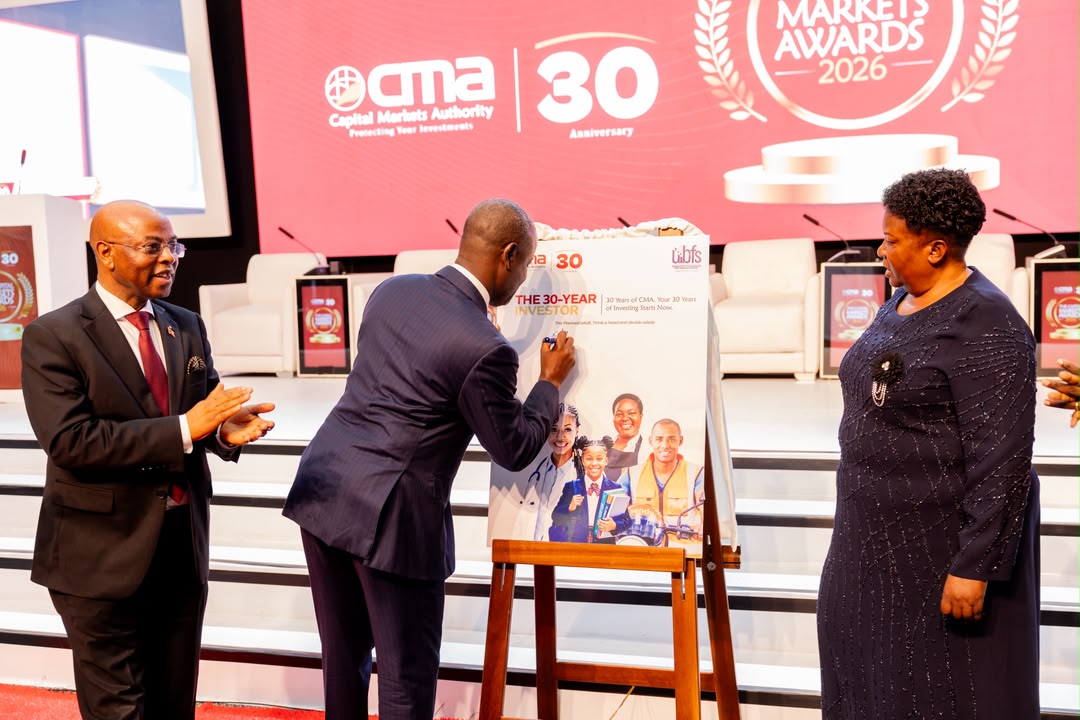
He made the remarks during celebrations marking 30 years of the Capital Markets Authority (CMA), where he said the government wanted to build the capacity of revenue agencies while supporting businesses to grow.
The approach is intended to help Uganda achieve its Tenfold Growth Strategy, which seeks to expand the economy to $500 billion by 2040.
Tayebwa said improving tax administration and bringing more businesses into the tax system would help the government collect more revenue without continually placing additional tax burdens on those already paying.
He also called for stronger support for the Uganda National Bureau of Standards (UNBS) to improve confidence in goods sold on the Ugandan market.
Tayebwa said consumers needed to trust the quality of products available to them, adding that effective standards enforcement was important for protecting the public and supporting legitimate businesses.
The Deputy Speaker also called for tougher action against individuals who embezzle money from private businesses, arguing that protecting companies was essential to preserving jobs and government revenue.
He said the government intended to pursue individuals accused of such offences through the appropriate anti-corruption courts.
“This must be taken seriously after realising that if such companies are not protected in this way, the country will continue to lose companies that have been generating revenue and providing jobs to the people,” Tayebwa said.
He argued that businesses needed a secure environment in which their investments could be protected and those responsible for financial wrongdoing held accountable.
Tayebwa also challenged the Capital Markets Authority to expand its reach beyond urban centres and make investment opportunities accessible to ordinary Ugandans, particularly those working in the informal sector.
He said the authority should develop approaches that allow people in rural communities to understand and participate in capital markets, instead of concentrating its activities in Kampala and other urban areas.
“I want to see CMA tapping into the informal sector and perhaps a teacher in my village in Mitooma benefiting,” he said.
Tayebwa’s remarks come as the authority seeks to increase public participation in formal investment and make capital markets more accessible to people who have traditionally relied on savings groups, informal businesses and other avenues to manage their money.
The CMA, which was established in 1996, regulates and promotes the development of Uganda’s capital markets. Its work includes licensing and supervising market operators and protecting investors.
Chief Executive Officer Josephine Okui Ossiya said the authority remained an important institution for mobilising domestic savings, attracting investment, financing infrastructure and supporting private sector growth.
She said the 30th anniversary was an opportunity to reflect on the institution’s achievements while preparing for the next phase of development.
Ossiya said Uganda would need innovative, inclusive and resilient capital markets to support its national development ambitions and create opportunities for future generations.
She emphasised the importance of widening participation so that more Ugandans could benefit from investment products and businesses could access long-term financing.
The authority has set a target of growing funded Collective Investment Scheme accounts to one million within five years. Such schemes pool money from different investors and invest it in assets managed by professionals, allowing people to participate without having to select and manage every investment themselves.
The target is part of broader efforts to increase financial inclusion and encourage more Ugandans to invest through regulated channels.
The celebrations also highlighted the importance of trust in building a strong investment environment.
The Deputy Governor of the Bank of Uganda, Dr Augustus Nuwagaba, urged businesses to build trust in their dealings, saying confidence was essential for commercial activity and the development of capital markets.
“Without trust there will never be progress,” he said, adding that trust helped promote efficiency, effectiveness and confidence in the financial system.